

Using the correct wheel bolts is just as important as choosing the right spacers. The wrong bolt seat can cause wheel damage, vibration, or even unsafe fitment. The two most common types are tapered (cone seat) and radius (ball seat) bolts — and knowing the difference ensures your wheels are safely and securely mounted.
What Is a Bolt Seat?
The seat is the shaped section at the base of the bolt head that mates with the wheel’s bolt hole. It’s what centres the wheel and spreads the clamping load evenly.
If the bolt seat shape doesn’t match the wheel’s hole, the contact area is tiny — causing uneven pressure, wheel distortion, and the risk of bolts loosening under load.
Tapered (Cone Seat) Bolts
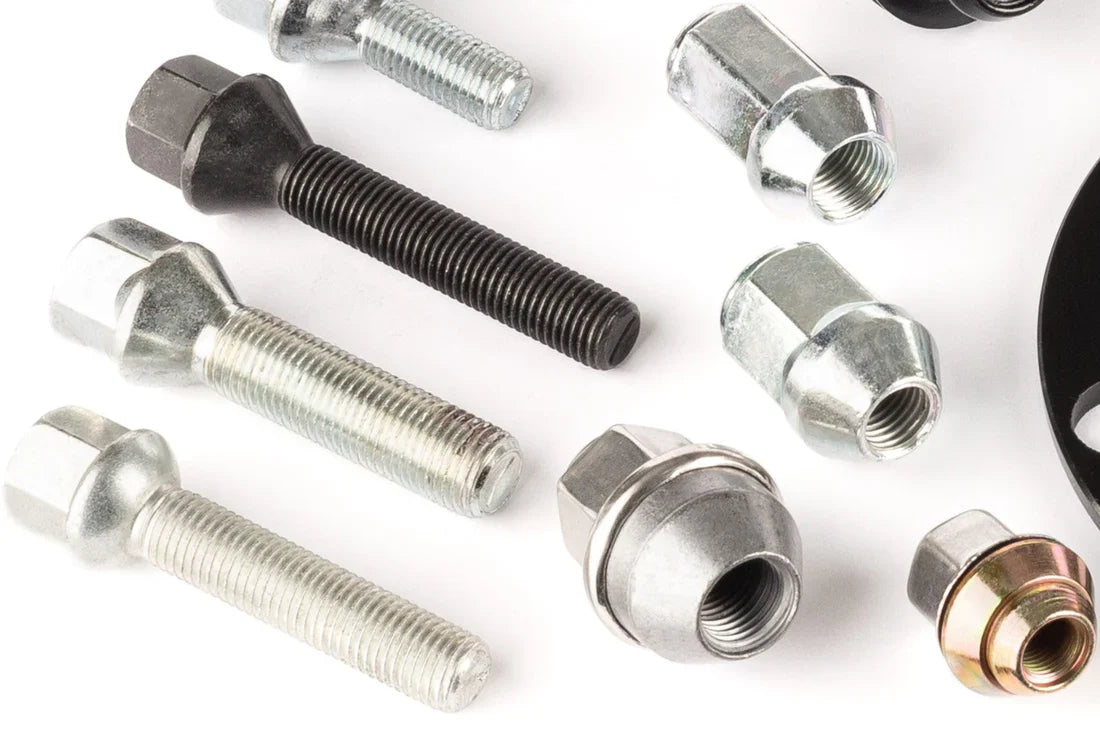
Tapered bolts have a cone-shaped seat, usually at a 60° angle. They’re most commonly used with aftermarket alloy wheels, including many performance and motorsport-style wheels.
Because the cone design self-centres as it tightens, it provides a firm and secure fit that’s ideal for custom alloys and precision-machined spacer setups.
All Killer Offset, Demon, and Bimecc spacer kits supplied by Stanced UK use tapered bolts when designed for aftermarket wheels, ensuring the perfect seating angle and maximum clamping security.
Radius (Ball Seat) Bolts
Radius bolts, also known as ball seat bolts, have a curved seat that matches the rounded profile of most OEM (factory) wheels.
The curved surface spreads the load over a larger area, protecting softer factory alloys from pressure damage. These are most commonly found on VW, Audi, Mercedes, and BMW OEM wheels.
Why Seat Type Matters
Mixing up bolt seat types is one of the most common and dangerous wheel fitment mistakes.
If you fit tapered bolts into a radius seat wheel (or vice versa), the contact point is drastically reduced — leading to:
-
Uneven torque and poor clamping force
-
Wheel vibration and imbalance
-
Damaged bolt holes or elongated seats
-
Risk of wheel loosening under load
Always match the bolt seat type to your wheels.
Spacers and Bolt Compatibility
When using spacers, always ensure the bolt seat matches the wheel, not the spacer.
All Killer Offset, Demon, and Bimecc spacer kits are supplied with the correct bolt type and seat profile for your vehicle and wheel setup — whether OEM or aftermarket — ensuring safe, vibration-free fitment every time.
The Bottom Line
Tapered and radius bolts perform the same job — but only when matched correctly to your wheels.
If you’re running factory alloys, you’ll need radius seat bolts. If you’re using aftermarket alloys, you’ll need tapered seat bolts.
Getting this detail right ensures proper alignment, even torque, and a secure fit for years of safe driving.
✅ Shop complete hub centric spacer kits with the correct tapered or radius bolts from Killer Offset, Demon, and Bimecc at Stanced UK – engineered for perfect fitment and safety.
