


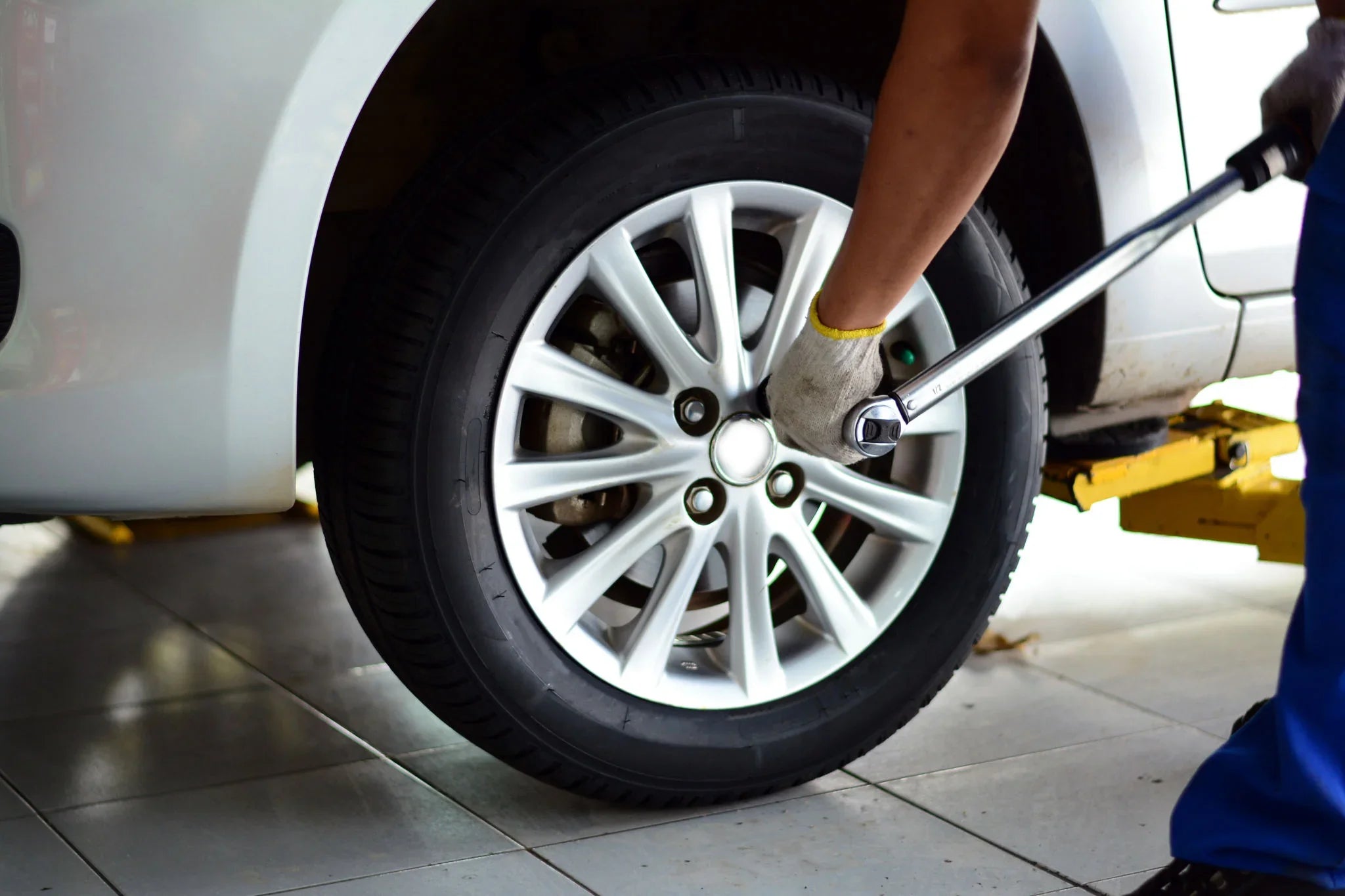
Correctly torquing your wheel bolts is one of the simplest — yet most important — steps when fitting wheels or spacers. Over-tighten them, and you risk damaging threads or warping brake discs. Under-tighten them, and your wheels could loosen while driving. Getting it right ensures your Killer Offset, Demon, or Bimecc spacers perform safely and vibration-free for years to come.
Why Torque Matters
Wheel bolts are designed to clamp the wheel and spacer firmly to the hub. The correct torque setting creates just the right amount of tension — strong enough to keep everything secure, but not so much that the threads stretch or seize.
Incorrect torque is a leading cause of wheel vibration, stud failure, and uneven brake wear.
Always Use a Torque Wrench
Forget guessing by feel or using an impact gun — the only accurate way to tighten wheel bolts is with a torque wrench. This tool allows you to set the manufacturer’s specified torque and apply consistent pressure across all bolts.
Typical torque settings:
-
Most cars: 100–120 Nm
-
Performance or larger wheel setups: up to 140 Nm
Always check your vehicle’s handbook for the exact specification.
Step-by-Step: Torquing Wheel Bolts
-
Clean the contact surfaces – Make sure the hub, spacer, and wheel faces are free from rust, grease, or debris.
-
Hand-tighten first – Start all bolts by hand to avoid cross-threading.
-
Tighten in a star pattern – Gradually tighten bolts in a criss-cross sequence to pull the wheel evenly onto the hub.
-
Use a torque wrench – Set it to the correct specification and apply smooth, steady pressure until you hear or feel the click.
-
Recheck after 50 miles – Once you’ve driven a short distance, re-torque the bolts to confirm everything’s still secure.
Common Mistakes to Avoid
-
Using an impact gun to finish tightening: this often over-torques bolts and can damage threads or distort the wheel seat.
-
Lubricating bolt threads: this reduces friction and can lead to over-tightening. Bolts should always be torqued dry unless the manufacturer states otherwise.
-
Uneven tightening: failing to use a star pattern can leave the wheel seated unevenly, leading to vibration or loosening over time.
Hub Centric Spacers and Torque Consistency
When using spacers, torque consistency is even more critical. Hub centric spacers from Killer Offset, Demon, and Bimecc ensure perfect alignment on the hub lip, allowing even torque distribution across every bolt. That means no vibration, no imbalance — just factory-smooth performance with a better stance.
The Bottom Line
Correct torque = safe fitment. Whether you’re fitting wheels or hub centric spacers, always tighten evenly, accurately, and to spec. It’s a small detail that makes a big difference in safety, handling, and long-term reliability.
✅ Shop hub centric spacer kits from Killer Offset, Demon, and Bimecc at Stanced UK – supplied with the correct hardware for a safe, vibration-free fit.
